
The verbal pun is often held in low esteem by those who aspire to be thought of as intellectual, or possessing advanced sensibilities, but notable writers have been irresistibly drawn towards this form, and have celebrated it in and through their work. The inner child in Mervyn Peake, for example, was delighted by the simple:
Mary Rose sat on a pin, Mary rose.
and he also created a book comprising visual depictions of well-known phrases, which relied on visual puns, called
Figures of Speech.
I've been reading
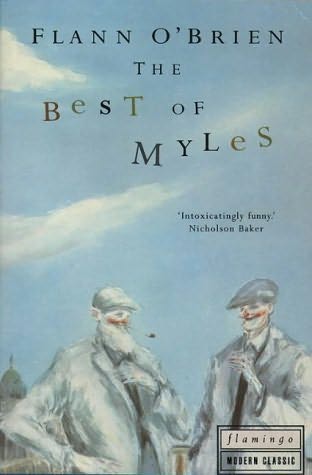
The Best of Myles, the selected journalism of
Flann O'Brien, who was such a supreme champion and exponent of puns that he often constructed them in two or three languages at once. O'Brien's column in
The Irish Times, penned under the name of
Myles na gCopaleen, took on a number of forms, each of which demonstrated his facility with and love for language, and in particular what could happen when registers, vocabularies and styles from different worlds were combined (this approach was given further and brilliant rein in his novels, especially
At Swim Two Birds). There is an incredible series of articles, for example, lamenting the decline of knowledge about steam technology among railwaymen, and another in which the writer is the unwilling victim of a man who unleashes a series of incredible, rambling stories about 'the brother', a practically superhuman individual who can single-handedly resolve any problem or nullify any perceived danger to himself and his household.
In probably the best-known series of articles, O'Brien takes the characters of Keats and Chapman (of 'Chapman's Homer' fame) and places them in various absurd scenarios, simply in order to deliver an excruciating pun at the end of an unfeasible story. Here's an example:
Keats was presented with an Irish terrier, which he humorously named Byrne. One day the beast strayed from the house and failed to return at night. Everyone was distressed, save Keats himself. He reached reflectively for his violin, a fairly passable timber of the Stradivarius feciture, and was soon at work with chin and jaw.
Chapman, looking in for an after-supper pipe, was astonished at the poet's composure, and did not hesitate to say so. Keats smiled (in a way that was rather lovely).
"And why should I not fiddle," he asked, "while Byrne roams?"
I love the use of the word 'feciture'. There are many more.
David
 Continuing the theme of puffing pet authors, I've been reminded recently - listening to the fervid debates about workers in the financial sector and their considerable rewards - of a gloriously silly Mervyn Peake poem about same.




 Posts
Posts

