 This is a very welcome and interesting guest blog from David Butler, who is active in the Anthony Powell Society.
 A few years ago I embarked on some research into the life and works of
Michael Arlen – a novelist of whom I hitherto knew nothing – on behalf of the Anthony Powell Society.
The Green Hat makes a brief appearance in the first novel of Powell’s 12-novel sequence
A Dance to the Music of Time. I don’t claim to be an expert now, and am still working my way through the novels and short stories of Arlen as I come across them, but for a Powell devotee,
The Green Hat is relevant because it forms the subject of a brief exchange between the narrator, Nick Jenkins, and his fellow Oxford student JG Quiggin, a scene which takes place in the early 1920’s when
The Green Hat was newly published and all the rage.
Powell obviously knew, even though he was writing in the early 1950’s, that he could use Arlen’s most famous work both to position the scene in time and to highlight aspects of his own characters’ personalities, without needing to do more than reference the work in passing. Anthony Powell did meet Michael Arlen on one occasion, although not until shortly before Arlen’s death.
But the influence of The Green Hat had come early upon Powell: as he related in his memoirs, on coming down from Oxford he first took up residence in Shepherd Market because he was inspired by the seduction sequence which opens that novel in (as Powell describes it) “that small village enclave…so unexpectedly concealed among the then grand residences of Mayfair.” In due course, Powell’s narrator Nick Jenkins would also embark on post-University life from a flat in Shepherd Market.
In later years Powell passed not uncritical judgement on Arlen’s works, as his 1968 Daily Telegraph reviews of The London Venture and
The Green Hat reveal. However, Powell did recognize that they convey “an extraordinarily potent whiff of the period.”
Now, lots of books do that and not all remain popular for long, but in my opinion this is one of the most important reasons for a continued reading of Arlen. There are plenty of society novels of the roaring 1920’s still in the public consciousness:
Evelyn Waugh’s Vile Bodies and
Aldous Huxley’s Antic Hay for example;
Afternoon Men by Anthony Powell also springs to my mind; sadly that is not in print, but that’s another story.
But these all tend to reference the
Bright Young People of a very slightly later vintage, whereas Arlen focuses on a generation of people who rather pre-date the BYP’s, a generation who had come out into society prior to 1914 only to find the social and moral certainties of that time ripped apart by the upheaval of war. This gives Arlen’s works a dark side which is not, I think, to be found in quite the same vein elsewhere. Think
Nancy Cunard rather than Elizabeth Ponsonby; Gerald March as opposed to Atwater.
Anyway, whatever you make of the books, Arlen’s own importance as a social and literary reference point in the 1920’s is beyond question.
The mentions in Anthony Powell’s novels and memoirs are just one example.
I found, during the course of my researches, that Michael Arlen touched on so many lives that, to pick up at random any literary or society biography or memoir of the inter-war period gave me a high probability of finding a reference to him, however brief.
From
Osbert Sitwell to
Barbara Skelton,
Nancy Cunard to
Noel Coward. Quite recently, Arlen got a good airing in
The Bolter by
Frances Osborne, her biography of Idina Sackville, who was probably a model for Iris Storm.
Even, as I discovered last week to my great delight,
PG Wodehouse could not resist slipping an Arlen mention into one of his novels.
Not only that, but from the lips of one of his finest comic creations, Madeline Bassett.
Let me then give the last word to Bertie Wooster as, in
Right Ho, Jeeves (1934), he tells of the Bassett thus:
“ ‘Oh, look,’ she said. She was a confirmed Oh-looker. I had noticed this in Cannes, where she had drawn my attention in this manner on various occasions to such diverse objects as a French actress, a Provencal filling station, the sunset over the Estorels, Michael Arlen, a man selling coloured spectacles, the deep velvet blue of the Mediterranean, and the late Mayor of New York in a striped once-piece bathing suit.”
David Butler
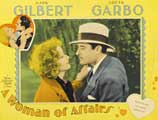 I thought it might be jolly to pen the occasional blog looking in a little more detail at the lives of Capuchin authors. The man behind our second best-selling title - Michael Arlen and The Green Hat respectively - launches this initiative.


 Posts
Posts

